Fragrance is not just a cosmetic product or an accessory, it is an olfactory signature, a subtle but persistent personal imprint that envelops first you and then those around you, provoking the senses and evoking memories.
A fragrance can say a lot about you, without a single word, revealing a part of the essence of your personality: refinement or strength, elegance or exuberance, simplicity or complexity. So it must be chosen with care and attention, just as it has been crafted in artisans' laboratories for thousands of years.
The history of perfume could only begin at the heart of mysticism, between mystery and legend, where man and divinity meet through sacred rituals.
The first evidence of the use of perfume takes us back millennia to ancient civilizations such as Egypt, Mesopotamia and Cyprus, where fragrance was not just an olfactory pleasure, but a bridge to the divine, an offering to the gods, a symbol of power and immortality.
Modern perfume is said to have first appeared in Hungary in 1370, created at the request of Queen Elisabeth of Hungary. She wanted a special perfume to seduce the King of Poland. The plan seems to have worked as the two later married. Known as 'Hungarian Water' or 'Queen of Hungary's Water', this perfume was a blend of rosemary essences, which was also believed to have therapeutic properties.
The earliest containers used to store aromatic oils and essences were simple vessels made of natural materials: stone, burnt pottery and carved wood sealed with resin. In Cyprus, ceramic vessels dating back almost 4000 years have been found containing traces of perfume. Over time, the perfume bottle evolved and became increasingly sophisticated. After the Romans perfected the technique of glassmaking, perfumes began to be sold in elegant, transparent bottles. During the Renaissance, Venice became an important center of glass production and Venetian perfume bottles were renowned for their beauty and elegance.
Today, they are true jewels, created by famous designers and made of or with precious materials. True works of art, reflecting the personality of the fragrance and the style of the brand, they become an expression of luxury, refinement and creativity.
Historical evidence from all over the world, dating back more than 4000 years, shows how the story of fragrance began in parallel in several cultures. Although we cannot know exactly when and where the first perfume appeared, we can see how the fascination of fragrance has always been around the world.
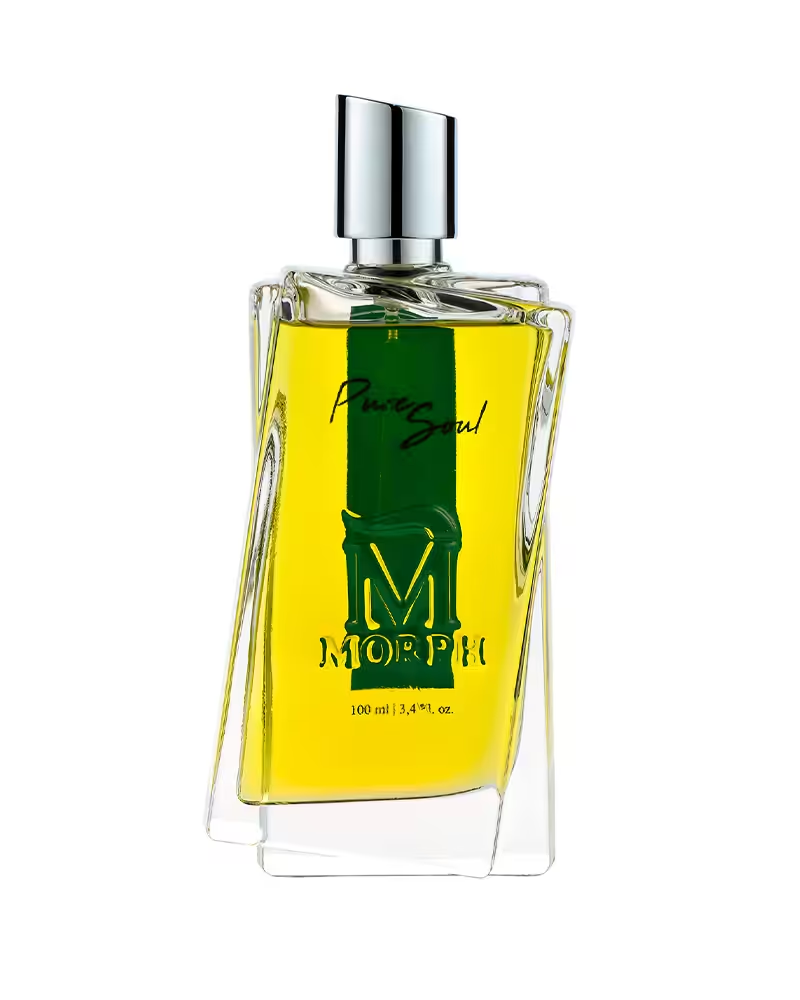
Morph Parfum is a niche perfume house with a fascinating story. The brand was born out of its founder's desire for change and innovation. Andrea Angelino, the son of a steelworker, felt that his destiny and his family's expectations did not match. Instead of pursuing a legal career, he chose to explore his passion for perfumes, opening a small perfumery in Naples in 2002. Direct interaction with customers gave him a deep understanding of the market and their desire for refined and unique fragrances. He felt the need for a change, a "metamorphosis" in the perfume world. And so, on a warm October day, Morph Parfum was born, its name reflecting its essence: transformation, evolution and a constant quest for innovation.
Andrea Angelino put together an exceptional team: an optical artist, two renowned perfumers (one Italian, one French) and two marketing specialists. At the heart of his vision were creativity and experience: by combining them, he aimed to satisfy the demand he had identified in the market for fine fragrances.
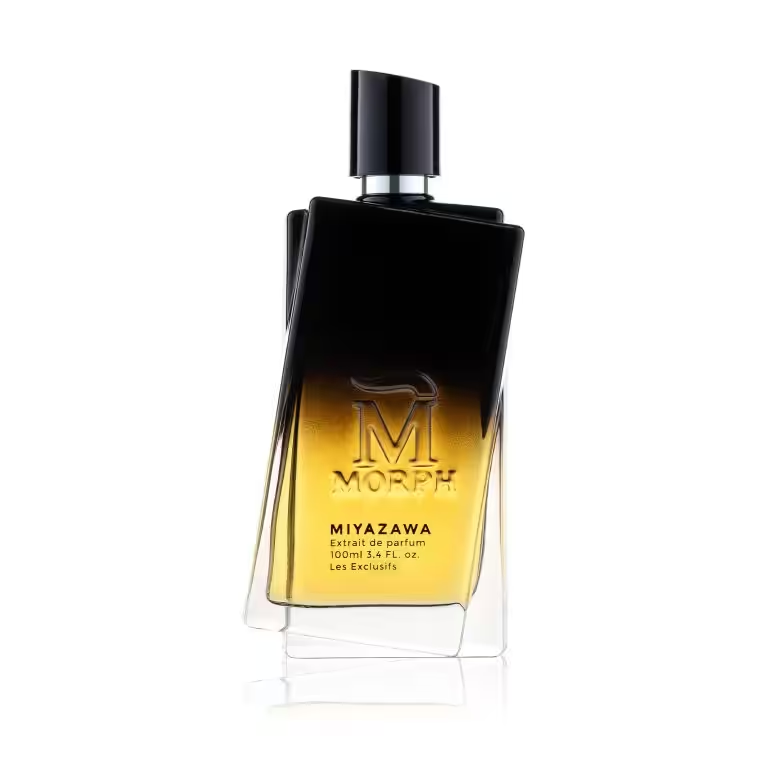
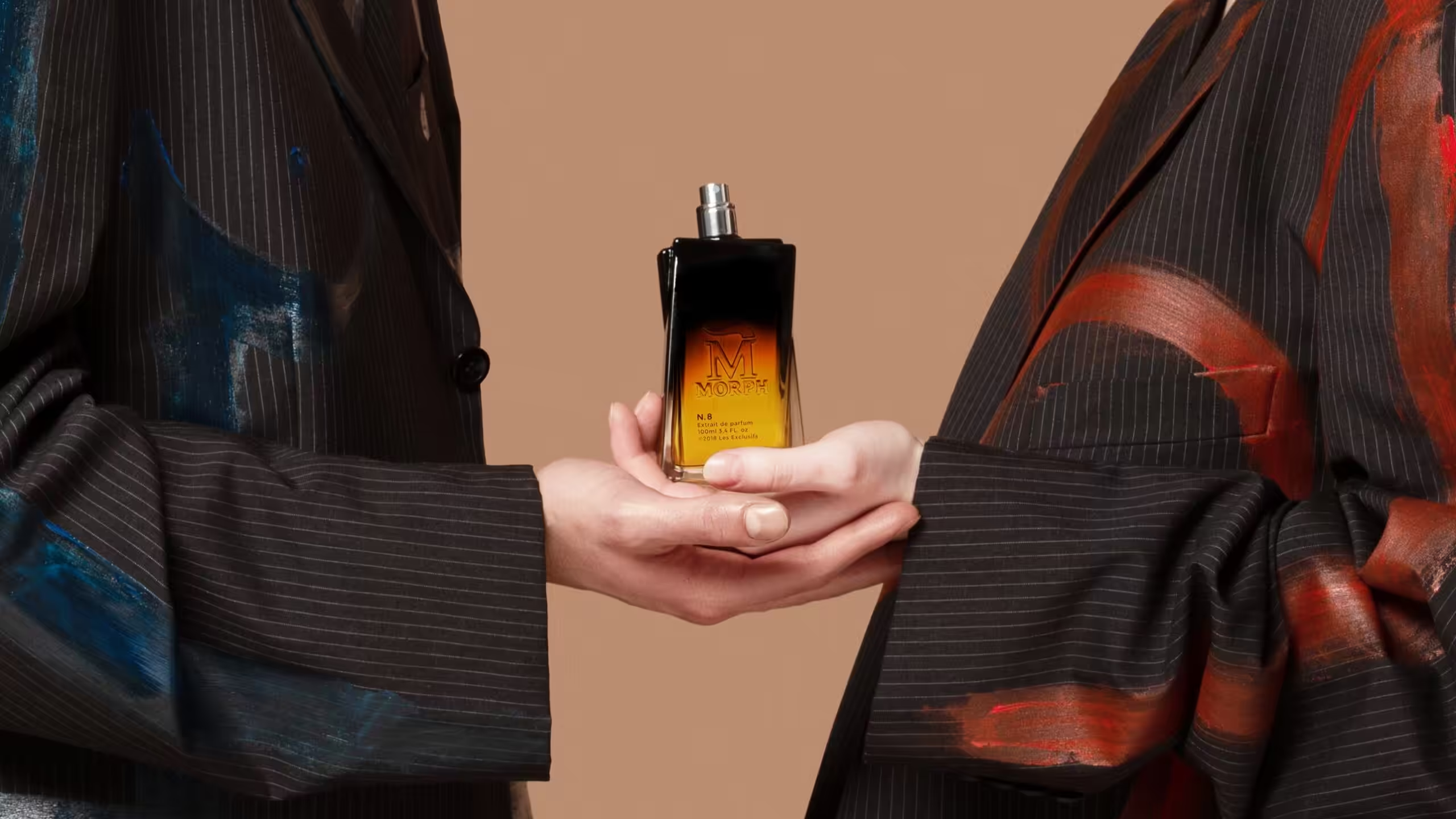
Then came the bottle with its characteristic design, a creation of Bormioli Luigi - with a rotating body symbolizing metamorphosis.
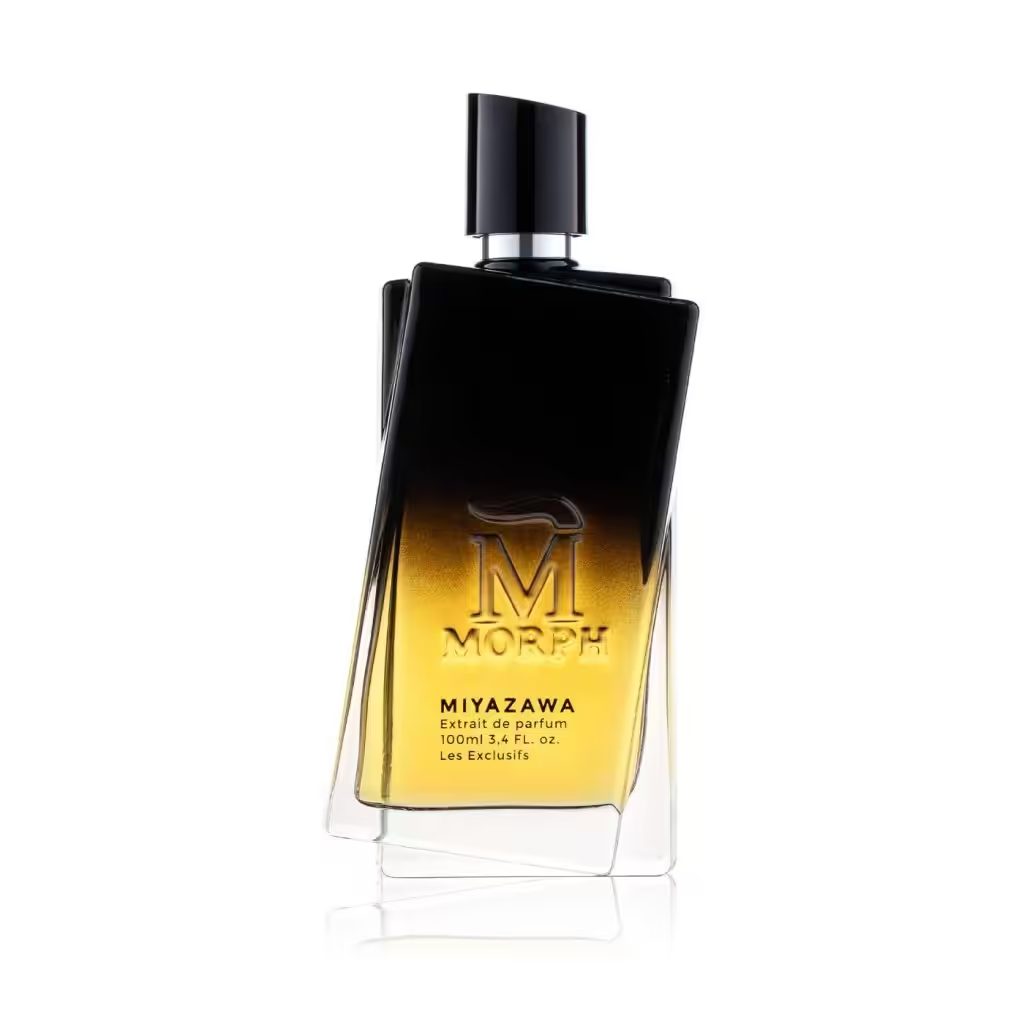
From a small perfumery in Naples, Morph Parfum has expanded globally and is now present in several countries around the world through distributors and online shops.
Although perfumes have been around for thousands of years, the concept of the modern perfume as we know it today - a blend of essential oils and alcohol - came much later.
"Queen of Hungary's Water" quickly became famous throughout Europe as an elixir of youth and a symbol of refinement. Its recipe was kept secret for centuries, only being revealed in the 18th century. The major innovation was the use of alcohol as a base. Alcohol allows the fragrance to diffuse better and linger longer on the skin.
The next major step in the history of perfume was the development of the perfume industry in France, starting in the 16th century. The city of Grasse in the south of France became an important center of perfume production, thanks to its Mediterranean climate, which was ideal for growing flowers. Here new techniques for extracting essential oils were developed and famous perfumes were created. Some of these techniques are still used today.
Morph Parfum combines traditional and modern extraction techniques to create niche fragrances with complex and unique flavors. Whatever the technique, the brand has a firm commitment to quality, authenticity and purity of ingredients.
In every culture, the history of perfume has had its own distinct path and importance, but it has not been lacking. Just as the Greeks believed that perfume had aphrodisiac powers and could stimulate creativity, Queen Cleopatra is said to have used perfume to seduce her lovers. Her ships had their sails soaked in perfume so that the scent would precede her arrival. The Egyptians believed that perfume could help them reach the afterlife, which is why they used large quantities in the mummification process, and the Chinese used it for medicinal purposes, creating various herbal remedies.
Also, ayurvedaTraditional Indian medicine uses fragrances to balance the chakras and heal various ailments. Napoleon Bonaparte was a great perfume lover, using up to 60 bottles of cologne a month. It is said that he even perfumed his boots and always carried a small bottle of cologne with him, which he used to freshen his hands and face.
In the history of Morph Parfum, it can be said that there have been "three periods", each represented by a distinct collection of fragrances.
Studies have shown that there is a link between the perfume we choose and our personality. For example, extroverts prefer floral and fruity fragrances, while introverts opt for woody and oriental scents. In addition, smell has been found to be closely linked to memory and emotions. This explains how a particular scent can instantly transport us to the past, evoking strong memories and forgotten feelings.
The Morph Parfum philosophy is based first and foremost on four values:
"MORPH, where scent metaMORPHoses", the motto of the Morph brand, perfectly reflects not only the essence of the brand, but of the entire industry. Thus, the history of perfume continues to be written, along with the fascination behind these elixirs that intoxicate our senses. Perfumes should be a constant metamorphosis, evolving on the skin and revealing new facets of the wearer's personality.
Throughout history, perfumers have been true alchemists of scents, exploring and perfecting various techniques to extract the magical olfactory essence of nature and transform it into enchanting fragrances.
Ancient Greece's influence on the world of perfume is undeniable. Many of the ingredients and techniques used by the Greeks are still used today in the perfume industry. Moreover, the Greek ideal of beauty and harmony continues to inspire perfume creators around the world.
Morph Parfum uses extraction techniques from those listed to create the olfactory diversity of its collections, notably steam distillation, solvent extraction and enfleurage.
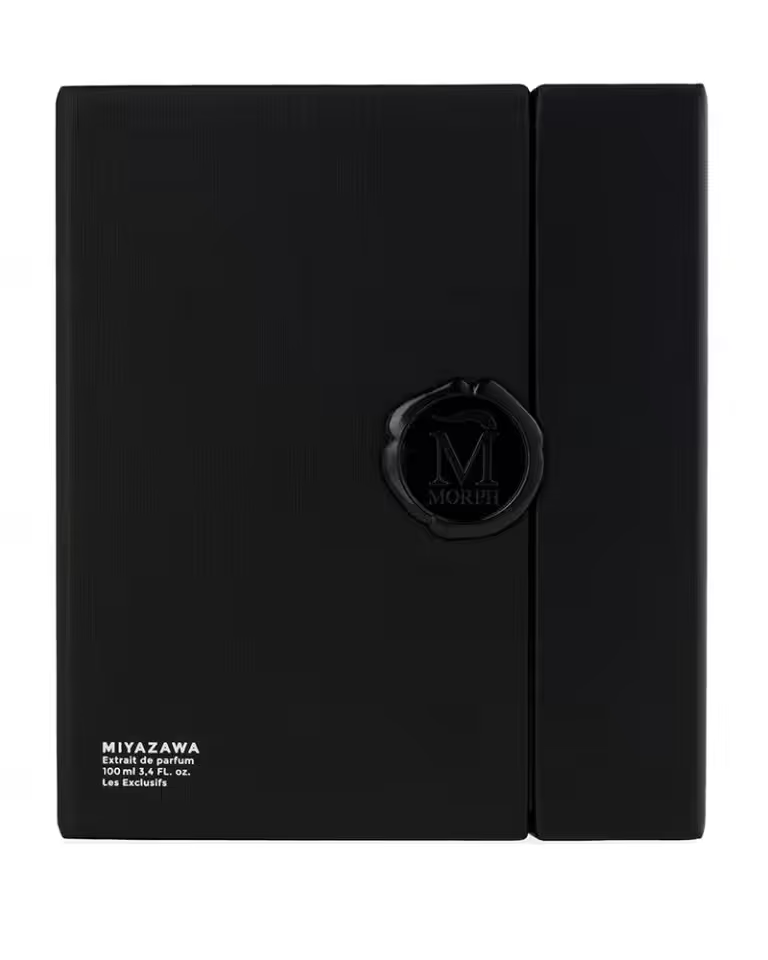
The 8 fragrances in the Morph collection Exclusives, are cold extracted from the highest quality ingredients. This delicate process keeps the olfactory properties of the ingredients intact, resulting in fragrances with a pure and natural aroma. Les Exclusifs use rare and precious ingredients and cold extraction contributes to the exclusivity and complexity of these fragrances. Due to the rarity of the ingredients and the meticulous extraction process, they are produced in limited editions, which enhances their value and uniqueness.
Contemporary perfumers, including those at Morph Parfum, continue to be inspired by these traditional techniques, which they adapt and combine with modern technologies to create innovative and sophisticated fragrances.
Perfume has always been associated with beauty, love, magic and divinity. From the desire to create beauty to the desire to seduce, fragrance has been and remains to this day a secret weapon. They are no longer healing potions, but they remain magical elixirs that fascinate, envelop and inspire.
Choose them carefully, as they can say things about you that you might not even suspect.