A helpful explanation about The difference between mainstream and niche perfumes. In short, a designer perfume is made for a broad audience and for presence in many stores. A niche perfume is usually found in fewer places, in a more restricted selection, and is not made to immediately please a broad audience.
Almost all of the discussion starts here. Designer perfume comes from a major fashion or beauty house and must function both as a product and as a brand extension. Niche perfume, on the other hand, originates from a perfume house that puts perfumery at its center and allows itself to be less safe.
An analysis of slow fragrance phenomenon connect the interest in niche to smaller batches, more exclusive launches, careful sourcing, and more creativity This explains why niche is so often perceived as territory craft and personality, not just marketing.
Frédéric Malle explain this change very well. In a material about he shifted the focus back to the perfumer and the composition, The central idea is that perfume shouldn't be treated solely as a product made to please the masses. Niche doesn't automatically mean better! It means a „freer” area, without the constraints of classic consumerism.
The biggest mistake is to believe that the real difference lies solely in price or in the note breakdown. No. The difference lies in the brief. A designer perfume, most of the time, has a mission: to be recognizable, pleasant, wearable in many contexts, and coherent enough with the brand's image to be sold on a large scale.
In the material above about Frédéric Malle's shift in perspective, This logic is explained directly: when you try to please everyone, you risk losing your personality. This isn't an insult. It's simply the business model.
Because of this, in rapid testing, the designer often wins. In the first few minutes it's clearer, more ready, easier to read. The niche plays a different game. Sometimes it opens up more strangely. Other times it seems more reserved. Other times it doesn't win you over instantly. But if you give it time, it starts to show layers, texture, and rhythm.
The analysis of „slow perfumery” Talk about maceration, detail, and construction, and this is felt not only in the story but also in the way the perfume settles and evolves on the skin.
In practice, this means something very simple. If you want a perfume that suits the office, a gift, or a first impression, the designer has a real advantage. If you want a perfume that starts well, but especially remains interesting after an hour, niche often has more room to maneuver.
In addition, in 2026, the niche is no longer reserved for a select audience. An analysis from Vogue on the Rise of Niche Brands looks very good how social media, fragrance communities, and independent boutiques have made their discovery easier. In other words, niche no longer necessarily means obscure. It means, above all, a different logic of creation and consumption.
Sometimes it's worth it. Other times it isn't. This is the part that many gloss over, because the story of rarity, divine ingredients, and formulas unattainable by the mainstream sounds better. The reality is less romantic and more useful: not all niche perfumes are excellent, just as not all designer perfumes are mundane.
Another useful article about How to read perfume concentrations and types Show that skin performance isn't reduced to a slogan or a packaging promise.
Likewise, the explanation about The difference between Eau de Parfum and Eau de Toilette Show that duration on skin depends on formula, concentration, structure, and context. An eau de parfum generally has a higher concentration than an eau de toilette and tends to last longer, but even here you can't reduce everything to the percentage of oil.
The third confusion is price. Yes, niche usually costs more. But you're not just paying for the perfume in the bottle. You're paying for a less common product, made in smaller batches, with more room for creativity, and sometimes more expensive ingredients. If that matters to you, the price difference can make sense. If not, it doesn't.
In short, niche perfumes are worth it when they offer something you can't easily find elsewhere: a distinct profile, freedom, surprise, a signature. They are not worth it when you pay more for the image than for the perfume itself.
How it smells on you. How it changes. What it leaves behind. That's all that matters...
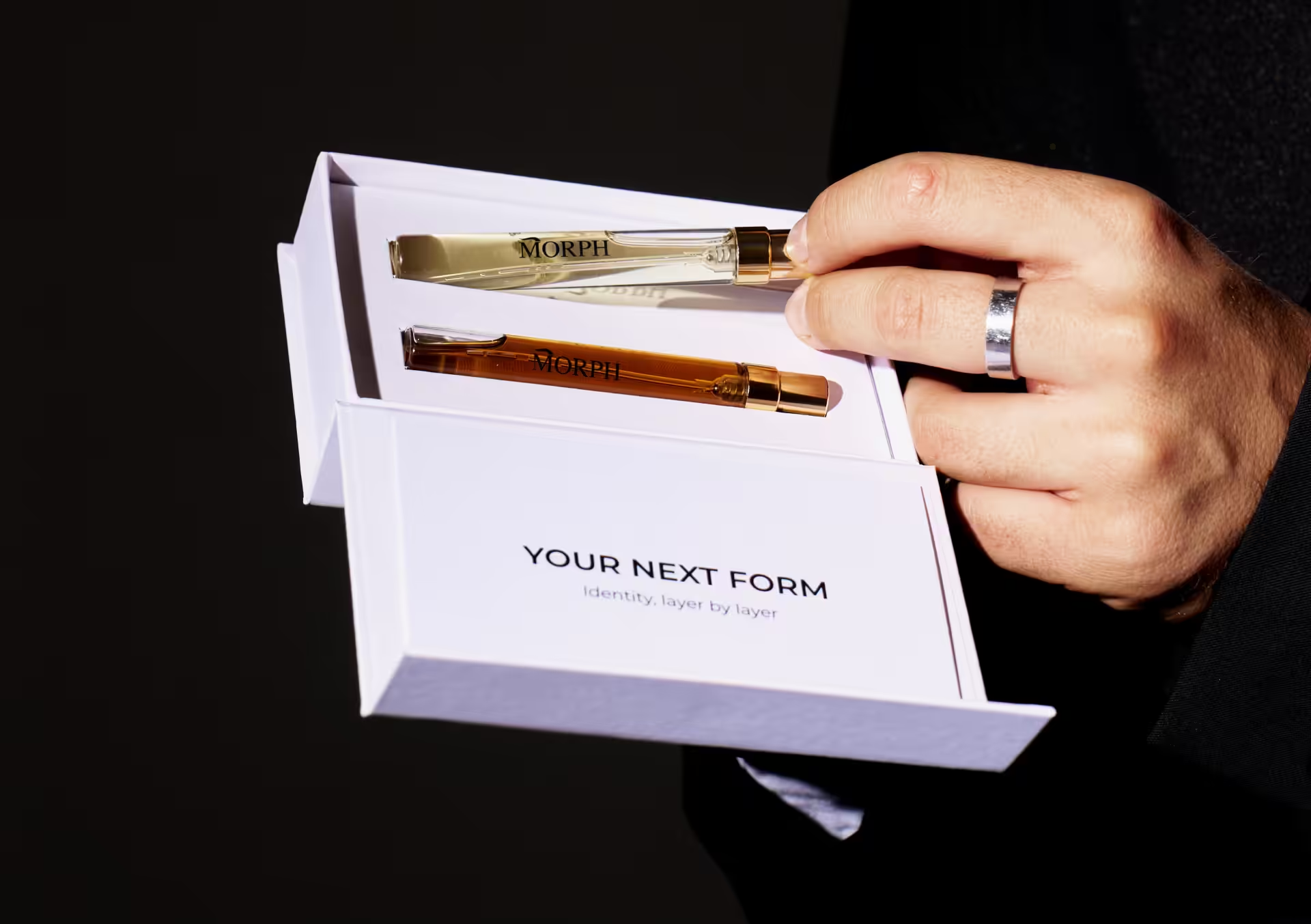
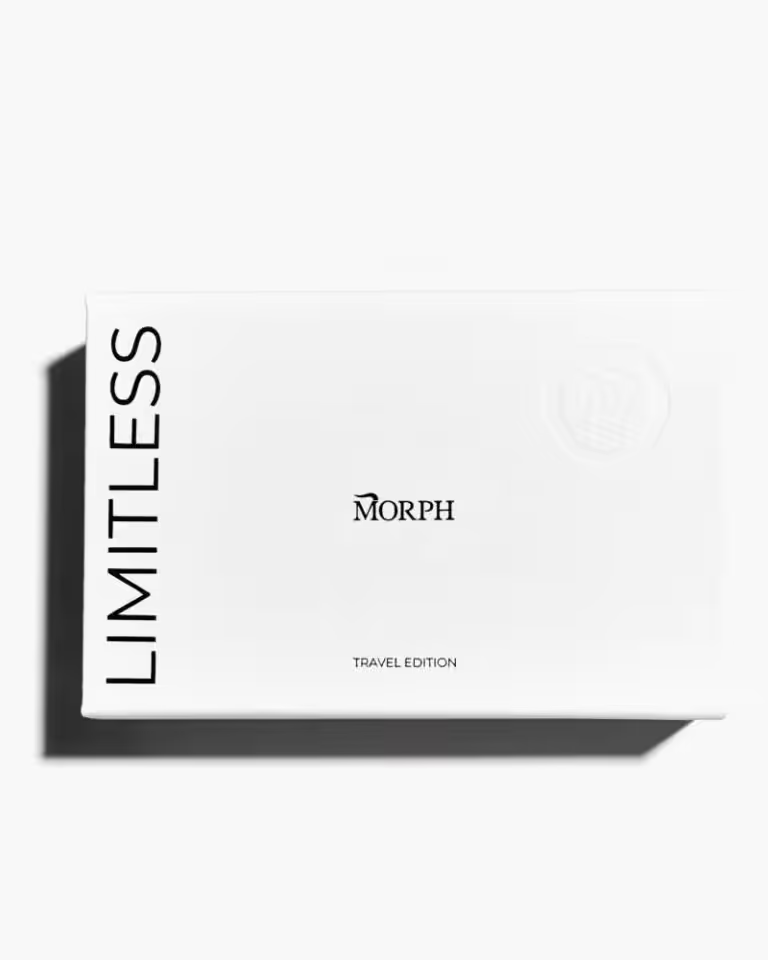
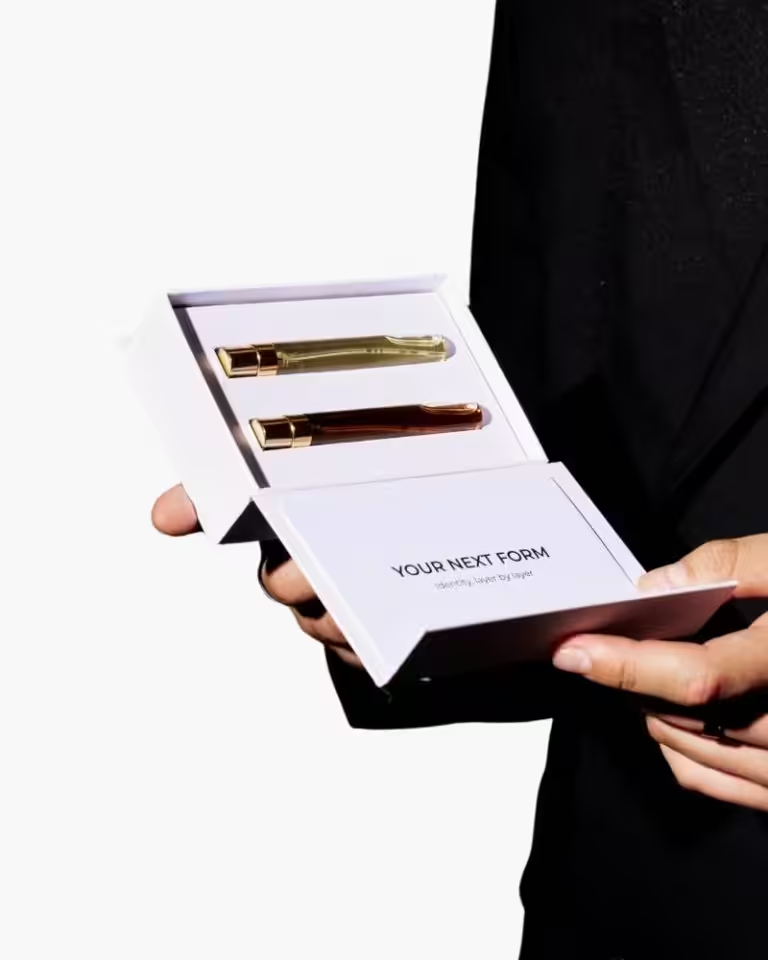
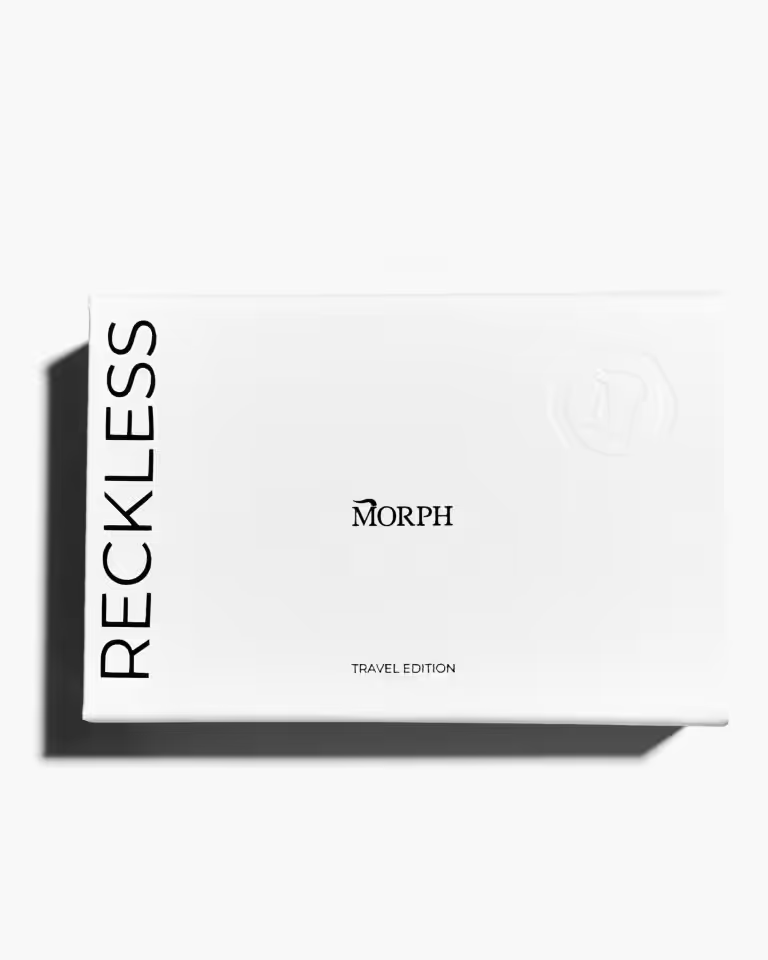
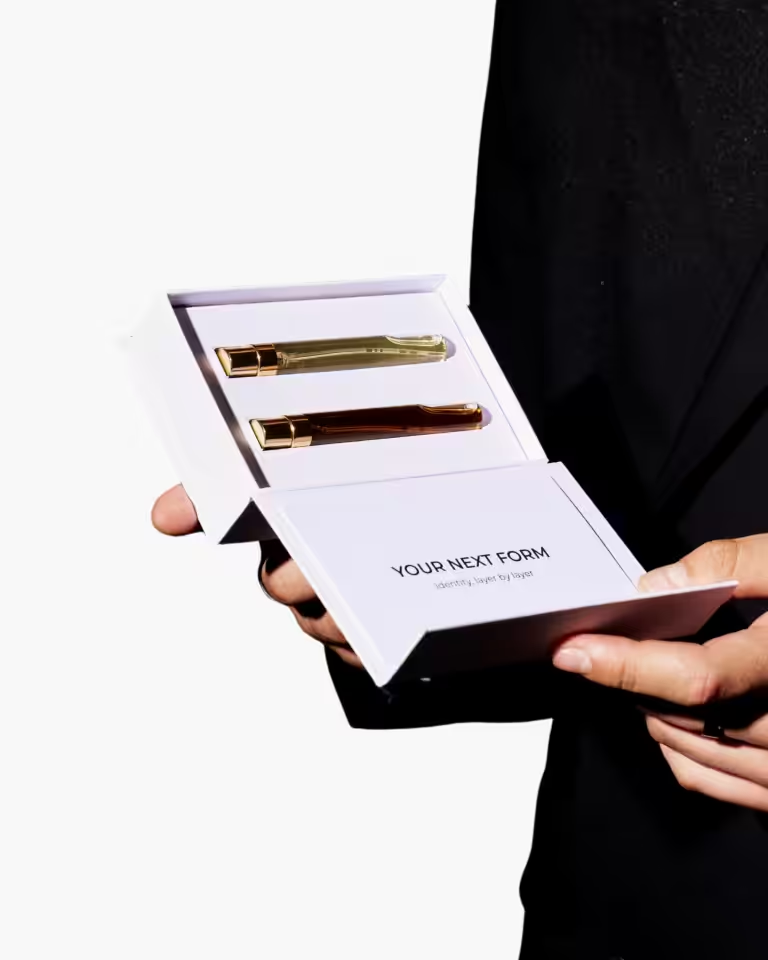
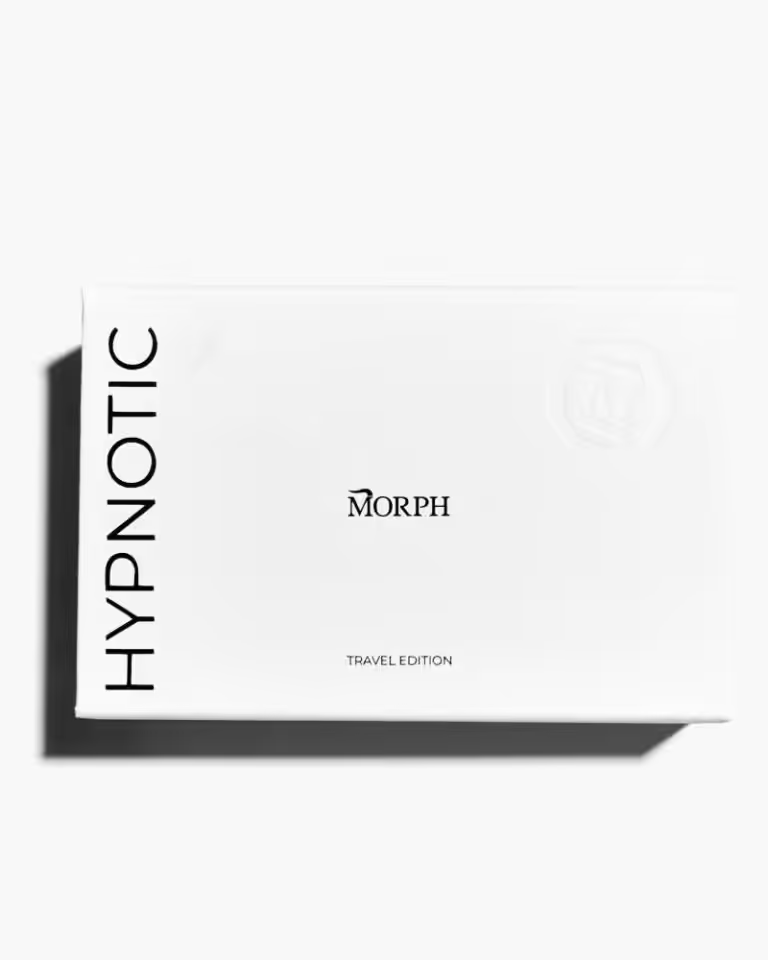
If you want to see the difference without a lot of theory, two very good examples are Morph Vision Eau de Parfum Unisex and Morph Cruda Eau de Parfum Unisex. They are both niche unisex perfumes, but they go in completely different directions. This is precisely where the underlying idea is seen: niche doesn't mean a single style, but more room for expression.
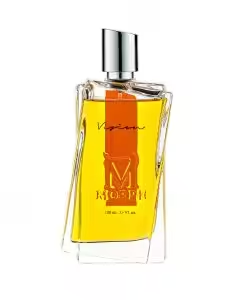
Morph Vision – you find a citrus-woody construction, with bitter orange, iris, litsea cubeba, vetiver, ambergris, and cashmeran. In simple terms, Vision is the kind of perfume that shows niche doesn't have to be difficult, dark, or eccentric just to seem special. It has clarity, it has structure, and it has a kind of cool elegance that makes it easy to wear without falling into the generic category. If you're coming from clean, office-friendly, or fresh designer perfumes, Vision is a natural step towards niche.
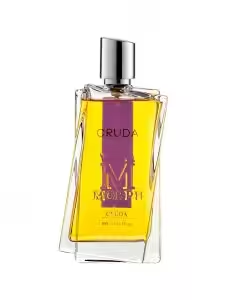
Raw Morph The register is different: bergamot, cedar, and black cumin at the opening, then Damask rose, cinnamon, and cloves, over a base of amber, patchouli, cashmeran, labdanum, vanilla, musk, and tonka beans. Cru is for those who want presence, but not noise. It doesn't jump out like a perfume made to instantly impress, but it has density, roundness, and a well-controlled warmth. It's the kind of perfume that says more after thirty minutes than in the first two sprays.
Placing them side-by-side, Vision and Cruda do more than simply showcase two distinct perfumes. They show why the discussion of designer vs. niche shouldn't be framed as a simple duel. Vision demonstrates that niche can be clear and controlled. Cruda shows that niche can be denser, more tactile, and expressive. In other words, niche isn't a style. It's a framework of freedom.
The first step is not to start from the idea that one is superior to the other. If you want a perfume that is easy to wear, versatile, easy to give as a gift, and has a high chance of being liked from the start, designer remains a very good choice. An analysis from Vogue on how the designer remains the gateway to luxury supports this exact idea.
If, on the other hand, you've reached the point where you say, „I smell good, but too familiar,” then niche starts to make sense. Here you pay less for instant validation and more for identity, for evolution, and for the pleasure of not smelling like everyone else. This too should not be mythologized. You're not buying a manifesto. You're still buying a perfume. It's just one with more courage in its composition and, often, a more personal relationship with the wearer.
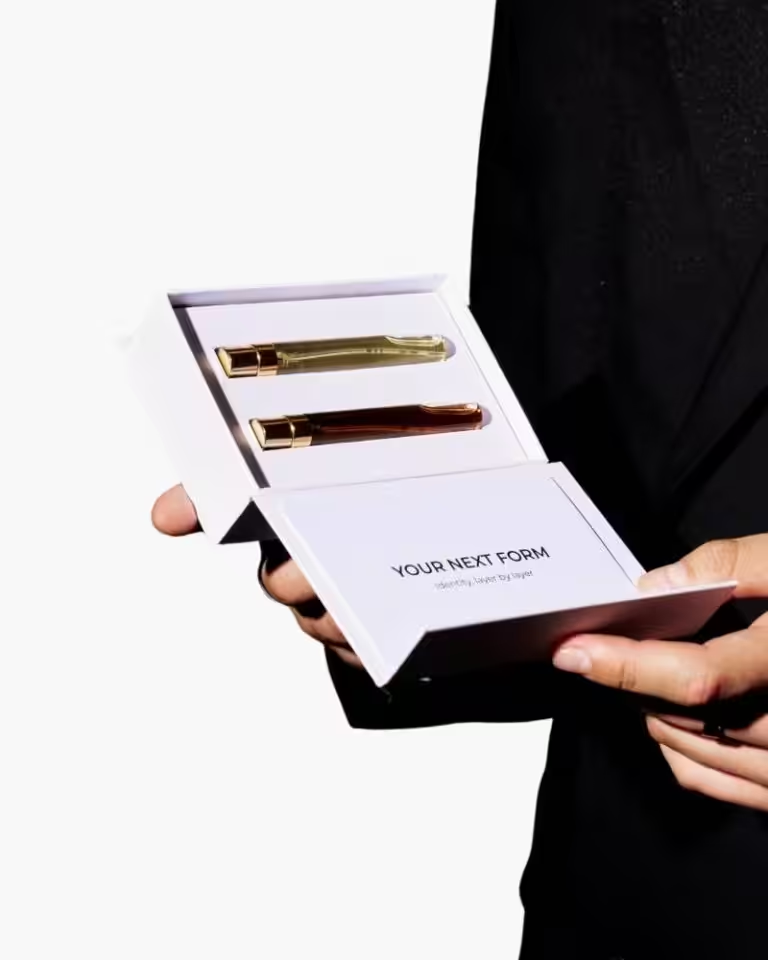
The second step is testing. Not on blotter, not from description, not after a reel, and not by the note list. Recommendations about Sample URIs and testing before purchase they are useful precisely because the same composition can be different depending on the version, temperature, time of day, and your skin chemistry. If you want to enter the niche without an expensive blind buy, a discovery set with mini perfumes is often a smarter choice than a full-size bottle picked blindly.
The third step is patience. A good perfume is not a referendum. It doesn't have to please everyone from the start. It needs to make sense for you, on your skin, at your own pace. Look at the opening, but especially at what happens after an hour. See if the base remains coherent. See if the perfume settles nicely or just screams loudly in the first few minutes and then falls flat. This is where the maturity of your choice truly shows.
As a simple rule of thumb, you can guide yourself like this: designer perfumes focus on immediate pleasure and versatility, while niche perfumes lean more towards personality and a personal signature.