Buying a perfume is one of the few decisions that seems simple, but it gets complicated right after you've pulled out your card. In the store it smells good, in the description it sounds perfect, and at home you discover that it tires you out or doesn't have the vibe you were looking for at all. The reason is usually the same: the fragrance hasn't been properly tested, meaning you haven't given it the time and context to show how it behaves on your skin.
In the lines below you can see how to test a perfume before you buy it, without rushing and without unnecessary tricks. I show you how to smell it on paper and on your skin, which mistakes are worth avoiding and how to tell if a perfume really suits you, not just impressed you in the moment. At the end you have a more detailed example with Promising from Morph to see what real-life testing looks like.
Test a maximum of 2-3 fragrances per session. Start on the blotter to filter quickly, then put just 1-2 on the skin. Don't rub your wrists. Don't decide in the first 5 minutes. Wait 20-30 minutes for the heart and a couple hours for the actual base. If after a day you still like it, only then does it make sense to buy.
A perfume doesn't smell the same on everyone and that's not a figure of style. Everyone's skin has its own balance, your own level of hydration, your own temperature and your own way of bringing out certain notes. What looks clean and elegant on someone else may be too sweet, too harsh or just plain tiring on you, even though we're talking about the same bottle. There's also the difference between first impressions and what lingers after a few hours. Top notes are designed to draw you in quickly, but they don't tell the full story. If you don't test the fragrance long enough, you risk buying something you only like in the first few minutes, not in the long run. Proper testing helps avoid unnecessary expense, especially when it comes to niche fragrances. But more important than money, it helps you choose something that represents you and that you enjoy wearing, without feeling weighed down.
A perfume is a mixture of molecules with different evaporation rates. The light ones are felt first and give the initial impression, the middle ones build the body of the fragrance, and the heavy ones stay on the skin and form the base, the part that lingers with you for hours. The skin is not a neutral surface: it has sebum, water, temperature, plus a microbiome that can subtly change how you perceive the scent and how long it lingers. That's why the blotter is only indicative, and it's the skin test that really decides.
Before you spray your first spray, it's worth stopping for a moment. Small details can really change the outcome and make you jump to the wrong conclusions.
Ideally, you should test on clean skin, with no traces of perfumed cream, strong deodorant or other fragrance. Otherwise, you don't smell the fragrance as it is, but a mixture that has nothing to do with reality and can easily fool you.
A space filled with odors, food, smoke, ambient perfume, can confuse your nose. If you can, test in an airy, simple place where the scent doesn't compete with anything.
Don't dive at five or six. After two or three, your nose gets tired and the differences become hard to notice. A short break in the fresh air helps more than anything.
Test paper is useful, but only as a first filter. It helps you get an idea of the scent's direction, not to make the final decision. You spray once, let it settle for a few seconds and smell briefly, without insisting. You're not trying to „get” the fragrance all the way through. You're just checking if it appeals to you enough to be worth putting on your skin. If you don't like it on paper, the chances of it convincing you on the skin are slim. If it grabs your attention, then it makes sense to take the next step.
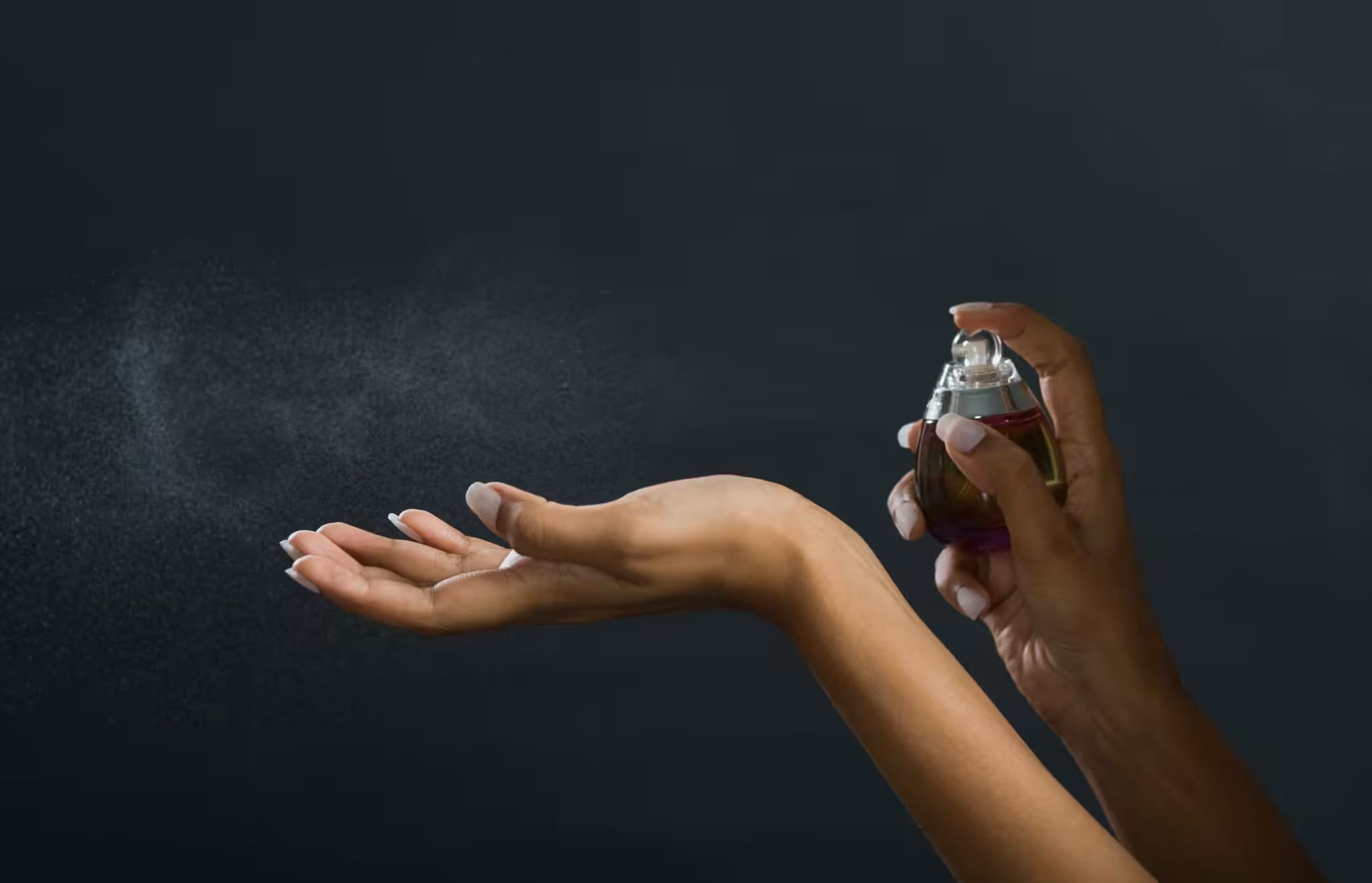
On the skin, the real test begins. Choose a simple area such as your wrist or the inside of your elbow. A spray will do. The important thing is not to rub the skin after application, as this can alter the evolution and hasten the evaporation of some notes.
The first few minutes are rarely decisive. They are designed to be pleasant and attention-grabbing. It's only after 20-30 minutes that you start to feel whether the fragrance has depth or if it was just a good first impression.
If you can, wear it for a few hours. See how it feels on the move, how it evolves, whether it accompanies you pleasantly or starts to bother you. A good perfume shouldn't tire you, and if it does, it's not worth pushing it just because it's popular.
As a simple benchmark:
It's a reflex, but it doesn't help. Let the perfume settle on its own, otherwise you risk ruining the very part that's supposed to convince you.
After a point, the nose doesn't make a difference and everything looks the same. Better fewer, but properly tested.
Coffee is an extra strong odor, not a reset button. If you want to rely on something solid. a study that tested the idea of coffee beans versus plain air.
If you feel pressure to choose on the spot, get out, walk around a bit, let the fragrance settle and come back. Good fragrance is not something to choose in a hurry.
Smelling a perfume is not done with deep, repeated inhalations, as if you want to „finish” it in two sniffs. Approach it calmly, with short inhalations, then pause. Come back after a few minutes, especially if you have it on your skin, as evolution is part of the test. If after half an hour you still like it and after a couple of hours you still feel good with it, only then does it really start to count.
The choice is personal and not just about the notes. It depends on how you feel wearing the perfume, the context and the season. In summer, a perfume that projects strongly can become too much, and in winter, a delicate fragrance can fade quickly. That's not to say there are hard and fast rules, it just means it's worth testing under the conditions you'll wear it most often.
The best sign remains the same: if the fragrance sits naturally on you and feels „yours”, not like a forced accessory.
Practical example: Promitivo from Morph
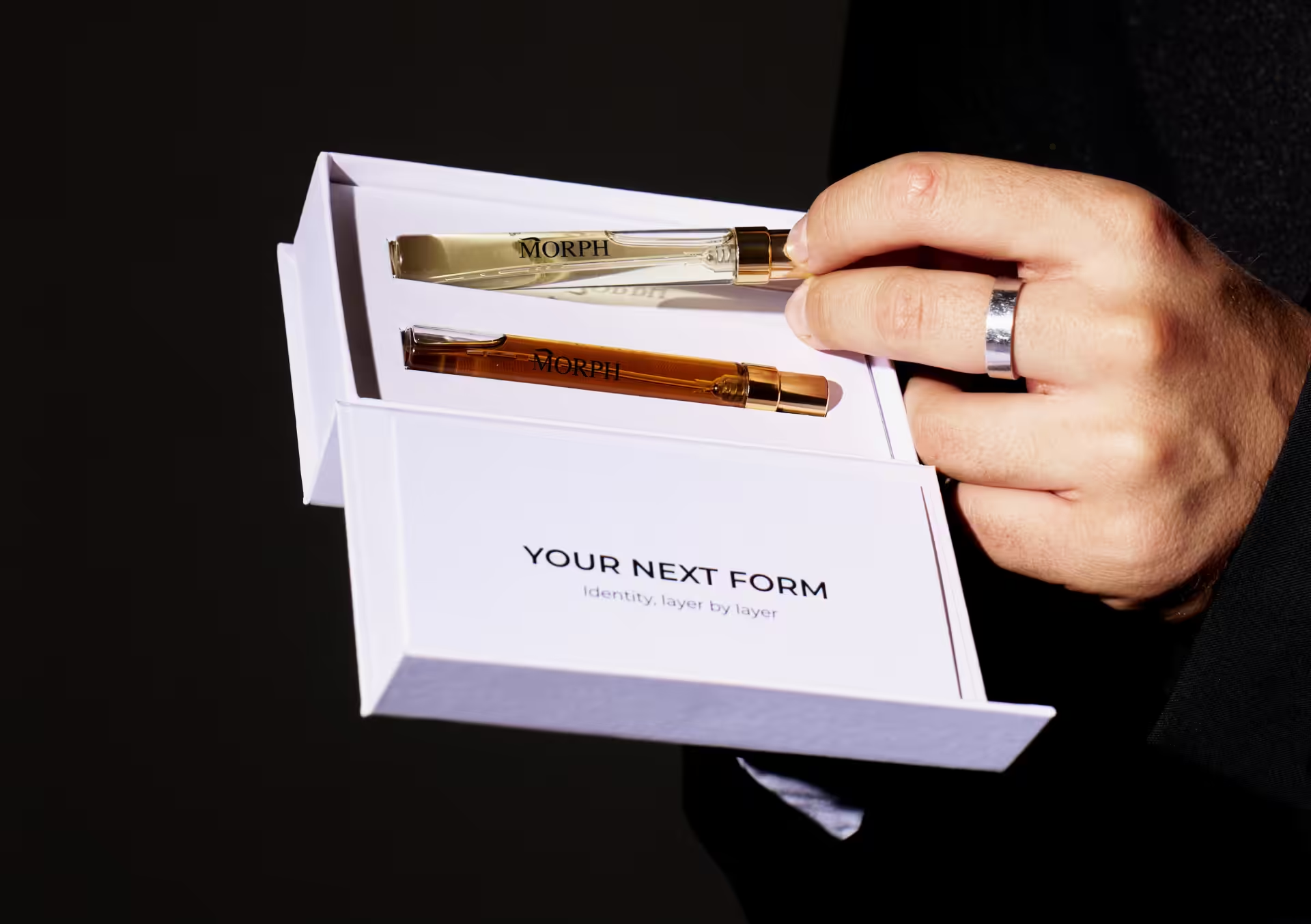
Promising is a fragrance that is in no „hurry” to impress and that's why it's a good example for testing. On the blotter, the onset can seem restrained, almost cautious, the kind of scent that's easy to overlook if you're just looking for quick impact. Here's where the classic mistake happens: you smell it, say okay, then jump to the next one.
On the skin, things change if you give it time. In the first few minutes you have a clean, maybe slightly edgy, initial look that gives you direction. Then, after 20-30 minutes, it starts to bind better, depth comes in and it becomes more cohesive, rounder, more „wearable”. At that point you realize whether it's a perfume that just sounds good as an idea or one that really works on you.
What Promitivo is actually worth watching as an exercise:
Testing a perfume before you buy is not a fad. It's the only way you can be sure the choice will stay good after the initial excitement. Take your time. Test a little, wait, come back. Let the perfume settle and show you what it can do. If after a day you still like it, you've probably found something worth wearing. If not, move on with no regrets.