It's definitely happened to you! You put perfume on in the morning, you leave home convinced you've made the right choice, and an hour or two later you have the impression that you can't smell it at all. The first reaction is simple: „it doesn't work”. But more often than not, things are not that simple.
How long an original perfume lasts depends on its composition, concentration, your skin and how you apply it. In general, a good perfume can stay on your skin for 4 to 12 hours, sometimes longer. On clothes, some fragrances can be felt the next day. The difference is not just in the label on the bottle, but in what's inside and how the perfume settles on you.
This is where the confusion arises. A fragrance may still be there, but you may not perceive it the same way. Your nose quickly gets used to certain scents, especially if you constantly wear the same perfume. This doesn't automatically mean that the perfume has disappeared. In many cases, others can still smell it, it's just that you don't follow it as clearly.
As a general benchmark, things look like this:
Perfume extract usually has a concentration of about 20-40% aromatic oils. It is the most intense form of perfume and can linger on the skin 10-12 hours or more, sometimes lingering on clothes until the next day.
Eau de parfum (EdP) generally contains 15-20% aromatic composition. It is the most widespread category and in most cases, it is felt on the skin between 6 and 10 hours.
Eau de toilette (EdT) has a lower concentration of about 5-15% aromatic oils. It is lighter and more airy and the average persistence is 3-6 hours.
Eau de cologne (EdC) is the most diluted variant, with about 2-4% aromatic composition. It is mostly designed for freshness, and the odor usually stays 1-2 hours on the skin.
These ranges are indicative. They are not hard and fast rules. Two perfumes with the same concentration can have completely different behaviors. A citrusy and very airy eau de parfum may seem shorter than an eau de toilette built on wood, musk or amber. This is where the structure of the fragrance really matters.
A perfume doesn't smell the same from start to finish. It evolves. That's the beauty of it, but also the reason why many people have the impression that it „no longer smells”.
At first they appear top notes. This is usually where citrus, mint, herbs, green accords, sometimes lighter fruits come in. They're the first to jump in and they're the first to leave. That's why the scent seems very lively immediately after spraying, then quickly subsides.
After them come middle notes, the part that gives direction to the fragrance. This is where flowers, spices, some denser fruits, powdery or velvety accords come in. These can linger for several hours and often this is where the true personality of the fragrance lies.
In the end they remain basic notes. Wood, musk, amber, vanilla, resin, patchouli, sandalwood, oud. They're what hold the perfume together and give it persistence. If a fragrance has a serious, well-constructed base, you'll smell it much more than a perfume built almost exclusively on freshness.
This is where one of the biggest misunderstandings arises. If you like fresh, citrusy, green, clean scents, you have to accept that many of them are not made to sit on the skin like an oriental or woody perfume. It's not flawed. It's their nature.
That is the question!
Often the problem isn't that the fragrance is gone, it's that you've become habituated to the smell. Your nose filters odor after a while. It's a normal mechanism. Basically, your brain decides that the smell is already familiar and stops treating it as new information.
It happens especially when:
This explains why you think you can't smell it, but someone who enters the room later tells you that the scent is still there.
Yes, concentration is important. The higher the percentage of aromatic composition, the longer the fragrance generally persists. But it's not enough just to look at what it says on the label.
Perfume or perfume extract has the highest concentration and usually the best resistance.
Eau de parfum is the most balanced option for most people.
Toilet water is airier, more open, faster.
Colony water is made more for freshness than longevity.
However, the actual composition matters enormously. An extract built on iris, white musk and clean notes can be more discreet than an eau de parfum with amber, tobacco, vanilla and wood. You can't judge everything by percentage alone.
This is where many overlook one crucial point. You don't apply perfume to a blotter. It sits on the skin. And everyone's skin behaves differently.
On dry skin, the perfume evaporates faster. It doesn't have enough to settle on. If you have dehydrated skin and you say „the perfume doesn't hold you”, chances are you're right, but the cause is not the perfume but the carrier you're wearing.
On moisturized skin, things change. The scent settles better, evolves more slowly and lingers longer. That's why a simple, scent-free body cream can make a real difference.
Then there's skin chemistry. Your pH, sebum, body temperature, perspiration, even your grooming routine can influence how fragrance develops. The same fragrance can smell warmer on one person and more warm on another. The same goes for persistence.
If you feel that fragrance doesn't last or wears off too quickly, it's worth knowing that the subject has been seriously studied in perfume chemistry and cosmetology. Fragrance persistence is not a matter of marketing or subjective perception. It depends on the properties of the aromatic molecules and how they interact with the skin.
Fragrance research shows that the duration of a fragrance is primarily influenced by volatility of aromatic molecules, the rate at which they evaporate. Light molecules, such as citrus, disappear quickly. Heavier molecules, such as wood, amber or musk, evaporate much more slowly and can remain on the skin for many hours. This is also why perfumery uses the classic top, middle and base note structure.
At the same time, the skin plays an essential role. Laboratory tests using chromatography and headspace analysis techniques have shown that fragrance evolves differently depending on skin type. Skin that is more moisturized or has more sebum is better able to retain the aromatic molecules, while very dry skin speeds up evaporation.
Studies in cosmetic chemistry confirm that the interaction between fragrance and skin is a complex process. Skin pH, moisture level, body temperature and even the skin microbiome can change how the fragrance develops and how long it remains perceptible.
Research published in Journal of Cosmetic Science and in academic databases such as PubMed shows that perfume molecules temporarily bind to the skin's natural lipids. These lipids act as a kind of carrier for the fragrance, slowing evaporation. That's why many people notice that fragrance lingers longer on well moisturized skin.
The same explains why two people can wear the same fragrance, but the olfactory experience is different. Perfume is not just a chemical formula, but a combination of its composition and the chemistry of the skin to which it is applied.
There are some small habits that are more harmful than they seem.
The first mistake is rubbing your wrists. You do it reflexively, but it doesn't help. You crush the perfume's opening and hasten the evaporation of the volatile notes. You spray and leave it alone. That's all.
The second mistake is applying to dry skin directly, without any preparation. If the skin is rough and dehydrated, the fragrance quickly wears off.
The third mistake is poor storage. Keeping perfume in the bathroom, near light, heat and damp is not helping it at all. Perfumes don't love a windowsill or a shelf bathed in sun. They want coolness, stability and darkness.
There's also the habit of spraying too little, then being surprised that you don't smell it. Some fragrances are dense and require little. Others are airy and need a more generous application. Not too much, but not token.
There is no magic. There are a few simple things that really work.
Apply perfume to moisturized skin. A fragrance-free cream or neutral body lotion helps a lot. Not because it „fixes” miraculously, but because it provides a better base.
Spray in areas where the skin is warmer. Wrists, neck, behind the ears, inside elbows. There the fragrance develops nicely and projects better.
You can also apply a little to clothes, with care. Fabrics hold the scent longer than leather. On a turtleneck, the inside of a jacket, a scarf, the scent can stay on surprisingly well. Just be careful with sensitive fabrics and very bright colors.
And one more thing: don't confuse quantity with effectiveness. If the fragrance is strong, don't apply it with 12 sprays. You tire it out. If it's more transparent, you can apply it a little more broadly. It's all about the formula.
This is where it pays to be careful. Not every perfume that smells good at first spray is also authentic.
The first thing you check is batch code, the batch code. It must appear on the box and on the bottle, and the information must be consistent. If it's missing, badly erased or doesn't match, you have a serious question mark.
Then you look at the packaging. An original perfume usually comes with good execution. The print is clean, the texts are correct, the bottle is well finished, the atomizer works as it should, the cap fits as it should. With good perfumes, the overall feeling is of a neat product, not improvisation.
And there's something else: the smell itself. An authentic perfume is not just „smelling”. It has evolution, it has depth, it has passages. A fake often seems aggressive, flat or alcoholic. It hits hard at first and breaks quickly.
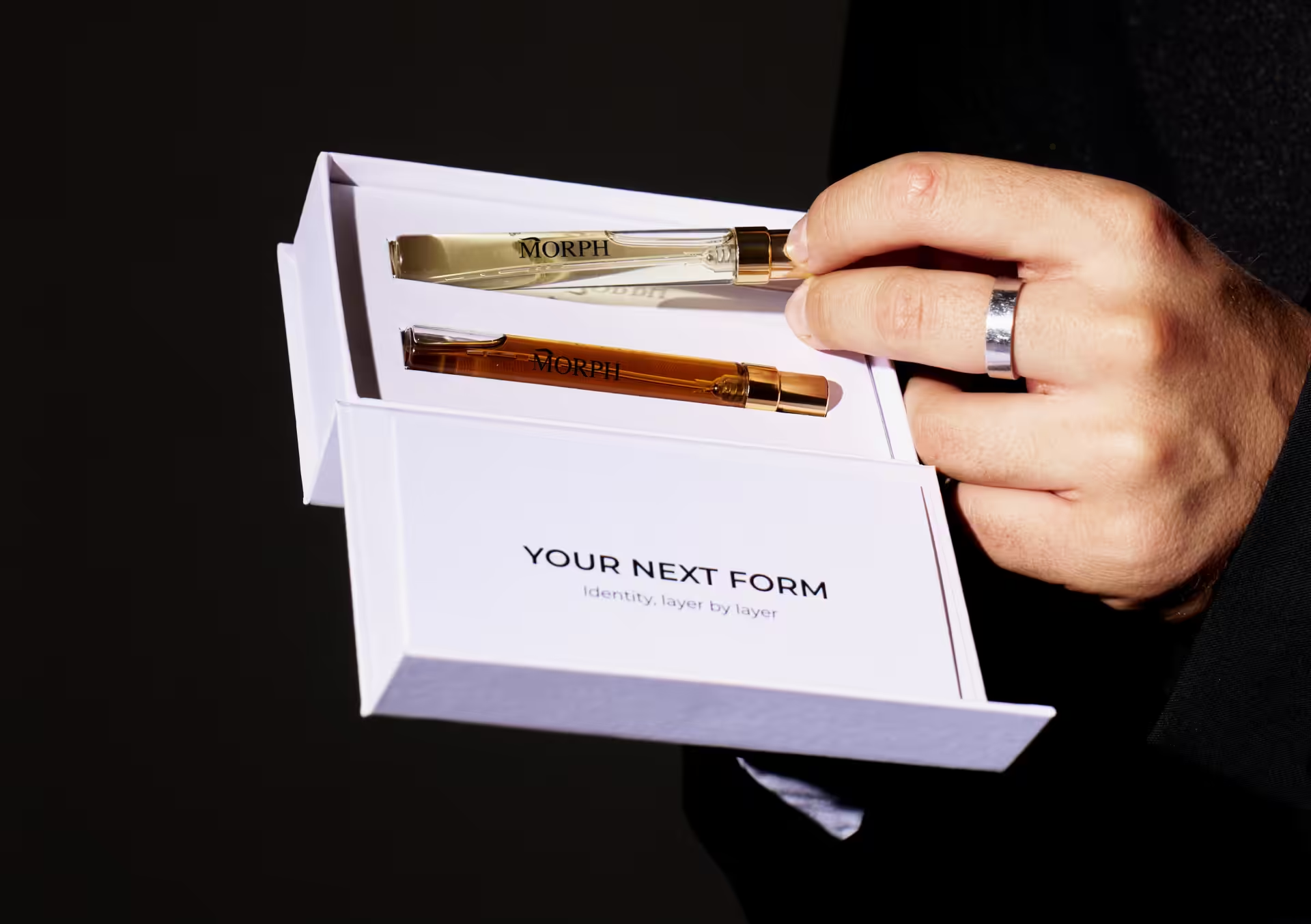
For perfumes Morph, There is also a very simple additional check. The brand uses the authentication system Certilogo, a unique code printed on the product packaging. You scan the QR code or enter the 12-digit CLG code on the Certilogo platform and receive confirmation within seconds if the product is original.
This system is used by many luxury brands to combat counterfeit products and to allow the customer to check the authenticity directly. Each product has a unique code and verification is instant via smartphone.
The authentic tester is not a weaker version of perfume. That's one of the stories that has been circulating for years and continues to mislead people.
An original tester normally has, same liquid like the bottle for sale. The difference is in the packaging. It may come in a plain box, it may have no decorative lid, it may be marked as a tester. But the contents should be the same.
The problem is not the idea of a tester. The problem is when someone uses the word „tester” as a front for a fake. That's where you have to be careful. If the price is suspiciously low and everything seems too convenient, it most likely is.
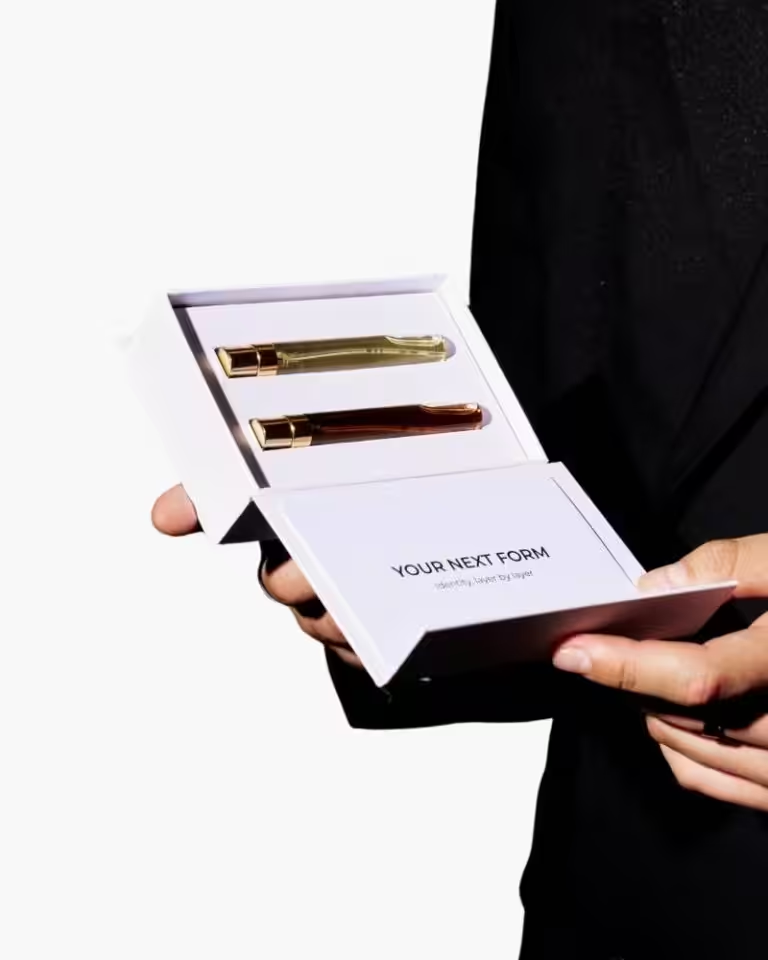
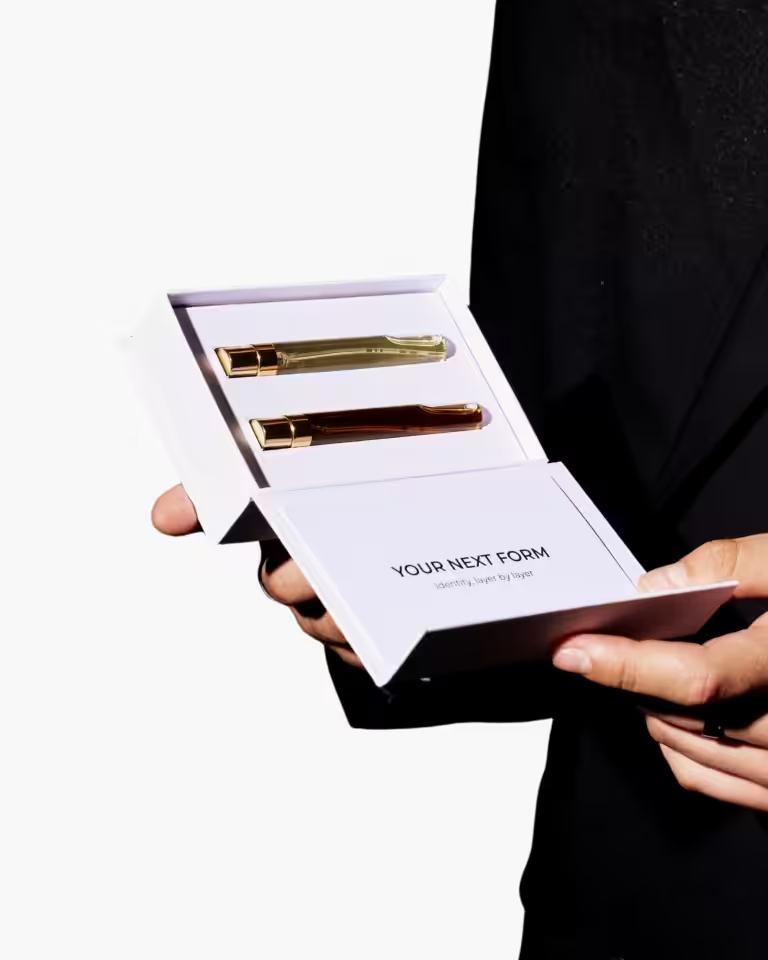
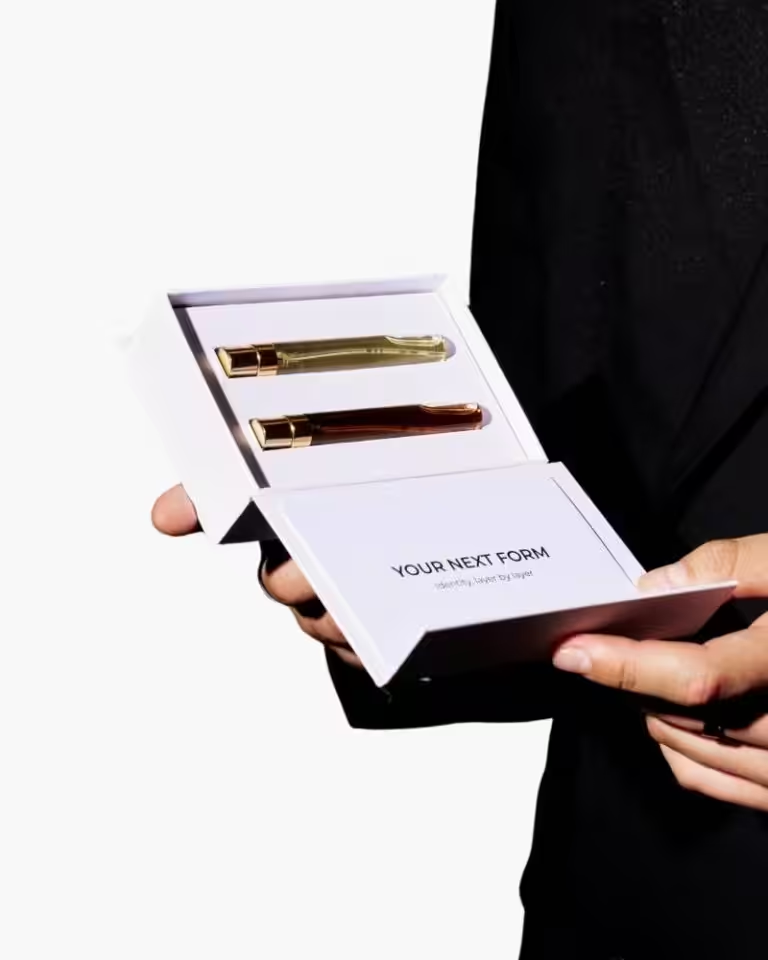
In the area of niche fragrances, the persistence discussion becomes more interesting, because many formulas are more densely and carefully constructed. This is where Morph Parfum comes in.
Many Morph fragrances are appreciated precisely for their presence on the skin and the way they linger. Not necessarily because they „hold” in an aggressive sense, but because they have structure, depth and a base that doesn't fall away quickly. When you work with notes such as oud, resin, wood, vetiver, amber, amber, musk, sandalwood or dense spices, you already have better premises for persistence.
That doesn't mean that all perfumes have to behave the same. A perfume that is built brighter, airier, cleaner, will have a different rhythm. But in general, in niche perfumery, and especially in the area of extracts or rich compositions, you're more likely to find perfumes that stay with you for hours, not just when you open them.
If you're wondering how long an original perfume lasts, the honest answer is this: from a few hours to all day, sometimes even more on clothes. But don't just look at the label and don't be too quick to say that the fragrance „doesn't last” after the first impression.
Maybe you've chosen a fresh scent, built to be bright, not heavy. Maybe your skin is dry. Maybe you rub it in after application. Maybe you're holding it wrong. Or maybe the fragrance is still there, you just don't follow through.
A good perfume is not about hitting hard in the first 10 minutes. It means building, evolving well and leaving something beautiful behind. If you want more persistence, look at the concentration, the base, the notes and the way you wear it.